Where to Start with AI: A Practical Guide for GTM Teams

Over the past year, I‘ve had hundreds of conversations with business leaders about AI. The pattern is always the same. They’re not short on tools or ambition. They’re struggling with where to get started and how to get value.
The pressure to adopt AI is real. But pressure without direction leads to experiments that don‘t stick, tools that don’t get used, and teams that grow more skeptical. Why? Because AI output didn’t lead to actual outcomes.
Here‘s what I’ve learned from watching teams that succeed with AI: they don’t start with AI. They start with a problem. A specific, painful, time-consuming part of their work that they want to fix. Then, they find the right AI use case to achieve that goal. As they see results, their confidence grows, and they explore other AI capabilities – again, tied to a clear goal.
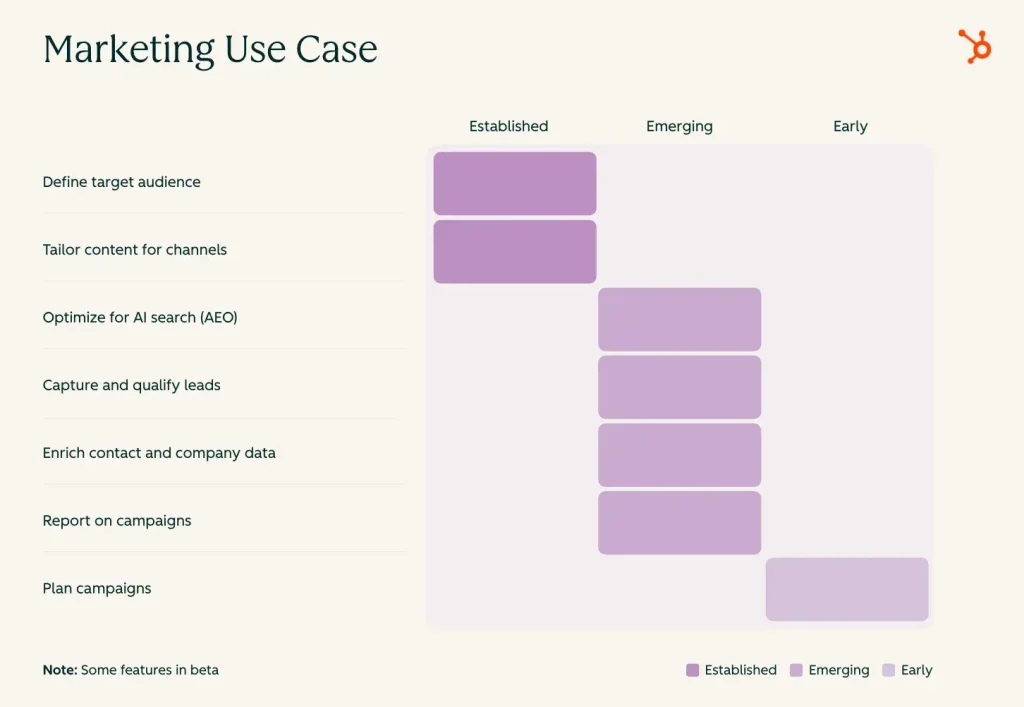
That‘s the approach I want to share. Not an exhaustive list of everything AI can do, but a practical guide to where marketing, sales, and service teams can get started and see real value with AI. For transparency, we’ve organized use cases by how ready the technology is today. At HubSpot, we are building and improving these capabilities every day. Let’s start with simple definitions:
- Established: These are use cases where AI works reliably. Implementation is straightforward. Results are repeatable. If you’re wondering where to start, it’s here!
- Emerging: These use cases are available today and improving quickly. They’re delivering value, but still evolving. As AI gets more data and context, they will become more powerful.
- Early: These are high-potential use cases that are still taking shape. If you consider yourself an early adopter, this is where you can experiment (with patience).
Jump to the use case that matches your team’s biggest challenges:
Use Cases for Marketing
Marketing teams have been under pressure to do more with less. More channels, more content, more personalization. All without more headcount. But AI is helping marketers reimagine how they get all of this work done. Here are the use cases teams can implement now and in the near term.
Established
Define target audience. Most segments have been built based on job titles and company size, but that doesn’t tell you who actually buys. AI helps you find the right-fit prospects who are most likely to convert. HubSpot customers can use Breeze Assistant to better understand customers, optimize their journey, and ultimately improve lead quality. Learn how here.
Tailor content for channels. You write a blog post. Then, you need to turn it into emails, social posts, ads. Every version takes time. With AI, you take one piece of content and adapt it for different channels – all in your brand voice. HubSpot customers can get started with Content Remix and Breeze Assistant to save time on content creation. See for …read more
Source:: HubSpot Blog