Page Authority: How to Build Pages That Rank



When I first started working in content and weaving SEO into my strategy, I treated Page Authority like a report card: the higher the score, the better I was doing. It took a few humbling ranking losses to a competitor with a lower PA score to make me reconsider.
Turns out, Page Authority is more of a compass than a finish line. In this post, I‘m breaking down what it actually is, how it’s calculated, what a good score looks like, and what you can do to improve it — so you can use it to guide your strategy, not just grade it.
Table of Contents
- What Is Page Authority?
- Is Page Authority a Google Ranking Factor?
- Page Authority vs Domain Authority vs PageRank
- What Is a Good Page Authority Score?
- How to Check Page Authority
- How to Increase Page Authority Without Gaming the System
- Frequently Asked Questions About Page Authority
What Is Page Authority?
Page Authority (PA) is a third-party metric created by Moz that estimates the relative ranking potential of a specific webpage on a 0-100 scale. A higher score suggests the page is more likely to rank competitively in search engine results pages (SERPs).
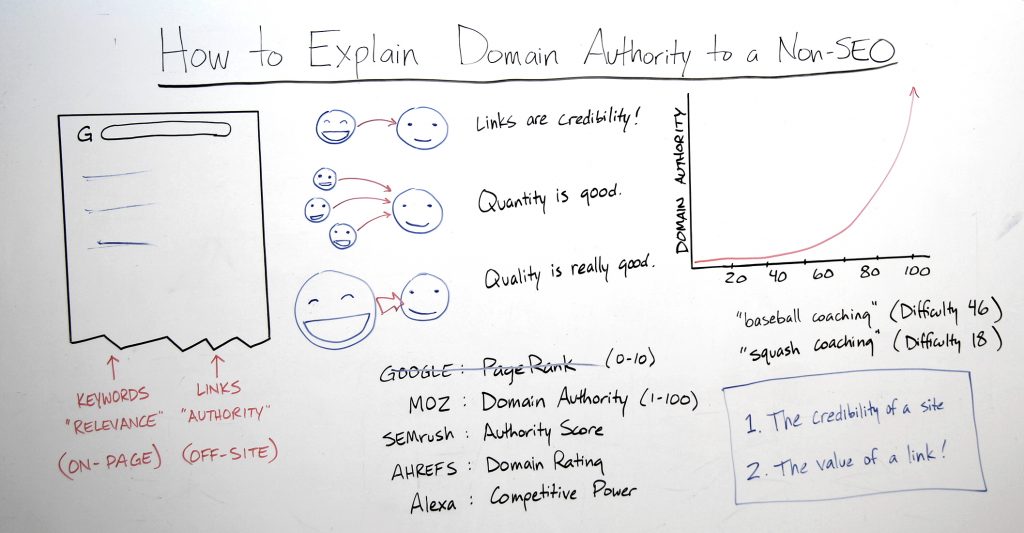
PA is scored on a 0-100 logarithmic scale, which means improvements become progressively harder to achieve the higher the score climbs. Moving a page from a PA of 20 to 30 takes far less effort than moving it from 70 to 80.
Moz calculates Page Authority using a machine learning model trained on thousands of search result data points. The primary input is the quality and quantity of inbound links pointing to a given page. Other signals, including linking root domains and MozRank, also factor in.
Pro Tip: Because PA is logarithmic, focus your energy on winning relevant backlinks rather than obsessing over moving the score a few points. The links drive the movement, not the other way around.
One important clarification: PA measures a single page, not an entire website. If you want a domain-level signal, that is what Domain Authority (DA) is for. I’ll cover the distinction in detail in the comparison section below.
Is Page Authority a Google Ranking Factor?
No. Page Authority is not a Google ranking factor. Google doesn‘t publish a Page Authority score, and it doesn’t use Moz’s PA metric in its algorithm.
Google has its own internal PageRank algorithm, which is historically associated with link analysis. PageRank is a different system entirely, and Google stopped publishing public PageRank scores in 2016. The name similarity between “PageRank” and “Page Authority” causes ongoing confusion in the industry, but they are unrelated.
So why does Page Authority still matter? Because it correlates with rankings. Pages with strong PA scores tend to have strong backlink profiles — something Google does care about. PA is a proxy, not a cause. When a page has …read more
Source:: HubSpot Blog