Automated email segmentation: Setting up for better targeting



Automated email segmentation uses dynamic rules and real-time data to group contacts automatically, eliminating manual list updates while boosting campaign relevance.
By connecting unified customer data, you can build segments that update based on behavior, lifecycle stage, or engagement, and then trigger personalized workflows and content for each group.
Start by cleaning your data, creating dynamic lists, linking them to automated journeys, and using AI to scale targeting and copy. In this blog post, we’ll guide you through setting up better targeting, step by step.
Table of Contents
- What is automated email segmentation?
- What data do you need before you automate segmentation?
- How to Automate Email Segmentation
- Starter Templates for Automated Segmentation
- Frequently Asked Questions about Automated Email Segmentation
Unlike traditional static lists that require constant manual updates, automated segmentation continuously adjusts audience membership based on changing customer behaviors, preferences, and lifecycle stages.
Dynamic lists update segment membership automatically in response to data changes, whereas static lists remain fixed until manually modified.
For example, a dynamic segment for “recent purchasers” will automatically include new customers who have completed a purchase and exclude those who haven’t made a purchase in the past 90 days. This automation eliminates the need for manual exports and improves message relevance by ensuring your segments always reflect current customers.
The key advantage is that segment membership triggers automated workflows and personalized content delivery. When someone moves from “prospect” to “customer,” they’re automatically enrolled in the appropriate welcome series while being removed from sales nurture campaigns. Your Smart CRM serves as the foundation for this automation, maintaining unified customer profiles that power accurate segmentation rules.
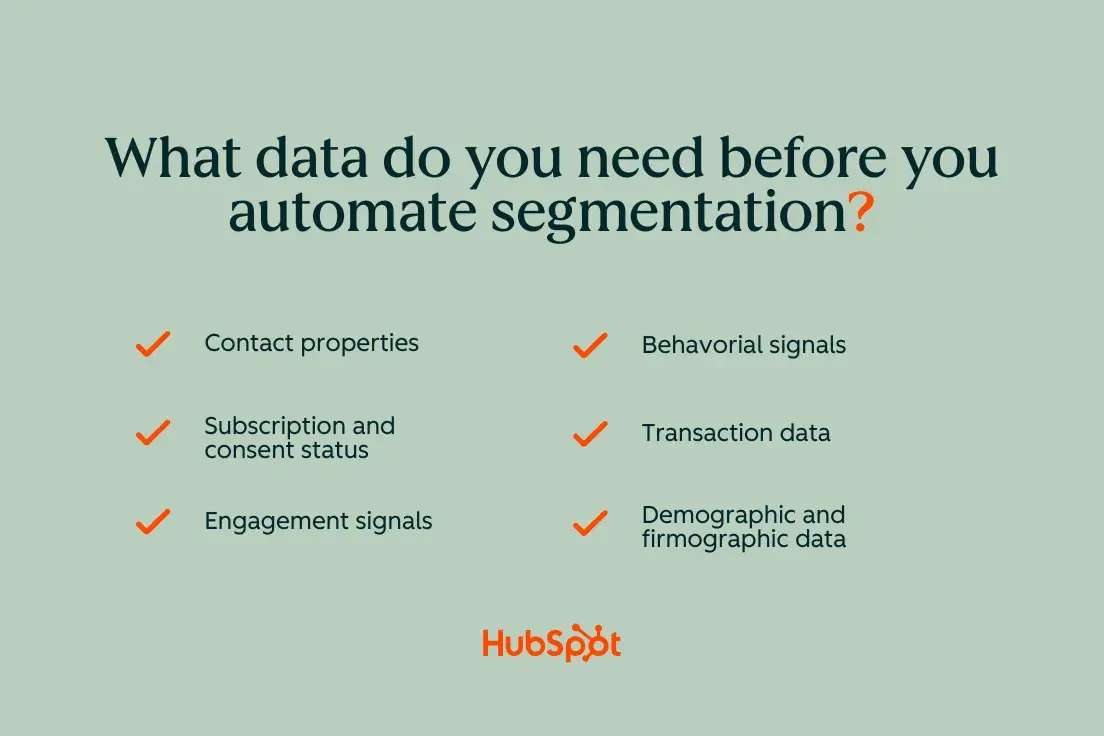
What data do you need before you automate segmentation?
Clean, unified data enables reliable automated segmentation. Before building dynamic segments, you need core contact properties, behavioral events, and engagement signals properly tracked and synchronized across your systems.
Essential data includes:
- Contact properties: Name, email, company, role, lifecycle stage
- Subscription and consent status: Opt-in dates, communication preferences
- Engagement signals: Email opens, clicks, website visits, content downloads
- Behavioral events: Product usage, trial activations, support tickets
- Transaction data: Purchase history, plan details, billing status
- Demographic and firmographic data: Industry, company size, geography
Use this decision tree to confirm your data readiness: Does the data exist consistently across all contacts? Is it accurate and up-to-date? Does it sync automatically between your systems? If you answer “no” to any question, address those gaps before building automated segments.
Your data sync and cleanup processes ensure that segmentation rules work reliably. Without clean, standardized data, automated segments can become unreliable or miss important audience members.
Clean and normalize your properties.
Start by auditing your contact properties to …read more
Source:: HubSpot Blog