Are You Choosing the Right Content Formats to Connect with Your B2B Audience?

By Nick Nelson
The internet has been filled to the proverbial brim. It’s chock full of the same stuff, as far as the eye can see. Thanks to generative AI, thousands of blog posts, ebooks and social media posts are being published every day, many of them barely distinguishable from one another.
In this bloated content environment, the format you choose isn’t just a matter of style; it can be the difference between being noticed or ignored. If your content isn’t resonating, the issue might be not what you’re saying, but how you’re saying it.
Adaptive B2B marketers are expanding beyond the written word and embracing dynamic, multi-format strategies to meet their goals more effectively.
The new content discovery landscape
Search behavior is shifting. AI Overviews and generative summaries are changing how users interact with search results. New data from BrightEdge shows that AI Overviews now appear in 11% of total queries on Google, up 22% from a year ago, with search impressions skyrocketing but click-through rates plummeting. B2B tech is among the industries most impacted.
In SEO, content visibility today depends less on traditional keyword dominance and more on relevance, structure and perceived authority.
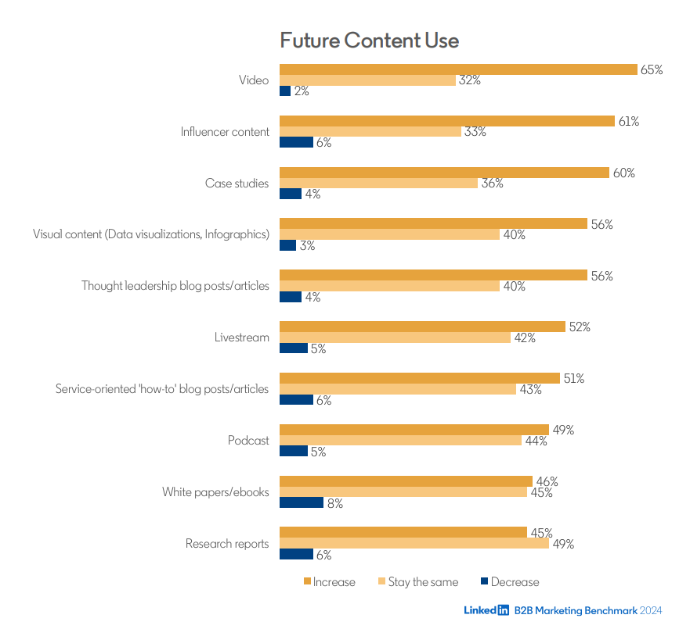
Meanwhile, buyer behaviors are also evolving. Multimedia is on the rise: According to LinkedIn’s 2024 B2B Marketing Benchmark, video and visual content were the most-used content types currently, and video led the way for planned usage. In fact, 65% of marketers intended to increase video usage this year. And it’s not just marketers who value video: nearly two-thirds of B2B tech buyers say that short-form social videos help inform purchasing decisions.
Diversifying content formats for different objectives
So, which content formats should you prioritize? The answer depends on your audience, objectives and stage of the funnel. Here are some high-impact content types and when to use them:
Top of funnel (Awareness)
Use these formats to capture attention, express your differentiating values and build brand familiarity.
- Short-form video (social clips, animations, selfie vids)
- Infographics and data visualizations
- Thought leadership blog posts
- Influencer co-created content
Mid-funnel (Consideration)
At this stage, content should demonstrate credibility, expertise and detailed understanding of buyer needs.
- Webinars and livestreams
- Case studies and customer stories
- Podcasts
- Original research reports
Dive deeper on the blog: Generate More Leads with Webinars: Avoid These Top Mistakes
Bottom-funnel (Decision)
These formats support conversion by addressing specific questions and reducing perceived risk.
- Interactive product demos
- Testimonials and social proof
- ROI calculators
- Implementation checklists
Letting data guide the way
Marketers don’t need to guess what kinds of content their audience seeks out and engages with. Advanced analysis can provide this understanding. One of the strategic services we offer at TopRank Marketing is audience research, which helps brands determine the most effective content formats by:
- Using specialized tools to identify audience affinities and behaviors
- Analyzing competitors and high-affinity sites for content gaps
- Conducting keyword and SERP analysis to determine which formats appear and perform best for relevant queries
Maximize your investment with strategic repurposing
Another key to …read more
Source:: Top Rank Blog