AI and SEO: What AI means for the future of SEO [Expert Tips & Interview]


By rsukhraj@hubspot.com (Ramona Sukhraj)

Artificial intelligence (AI) is rewriting the playbook of so much of our lives — how we interact, how we learn, how we complete daily tasks, and sometimes even what we eat for dinner. So, of course, AI and the future of SEO are no different.
It’s been just over three years since ChatGPT took the internet by storm. While AI was technically nothing new in modern consumer (and marketer) lives, this level of AI had never been so accessible to the general public before, and they certainly haven’t taken it for granted. According to McKinsey, half of Google’s results already have AI-powered results, and trends predict that number to hit 75% by 2028.
What does this mean for marketers? We’ll unpack how AI and SEO are converging, how AI has changed consumer behavior, and what it holds for the future of SEO.
Table of Contents
- How AI is Impacting SEO
- How Marketers Can Adapt SEO to AI
- Frequently Asked Questions About AI and SEO
How AI is Impacting SEO
This topic is a complicated one. AI is transforming SEO practices. It hasn’t just changed how marketers optimize to get found in search engines; it’s changed consumer search behaviors and even the search engines themselves. It was all a chain reaction, really.
AI changed consumer search behavior, so search engines adopted AI-powered features, and now marketers are turning to new strategies to appeal to AI, while also using AI to expedite and enhance optimization.
Let’s start from the top with the catalyst:
AI has changed consumer search behavior.
Google isn’t the only tech giant consumers turn to for answers anymore. People are increasingly calling out to voice assistants like Alexa and Siri, and asking chatbots like ChatGPT, Perplexity, and Gemini their questions.
GWI actually found that 31% of Gen Zers already prefer using AI platforms or chatbots to find information online, while research from Semrush predicts that LLM traffic will pass traditional Google search by the end of 2027.
On top of that, HubSpot research found that 79% of those already using AI for search believe it actually offers a better experience than traditional search engines. Clearly, consumer search behavior and preferences are shifting, and artificial intelligence plays a large role in this.
AI has changed search engines.
Seeing the popularity of AI platforms, Google began rolling out several generative AI-powered features, such as AI overviews and “AI Mode,” that offer more chatbot-like experiences than traditional search results pages.
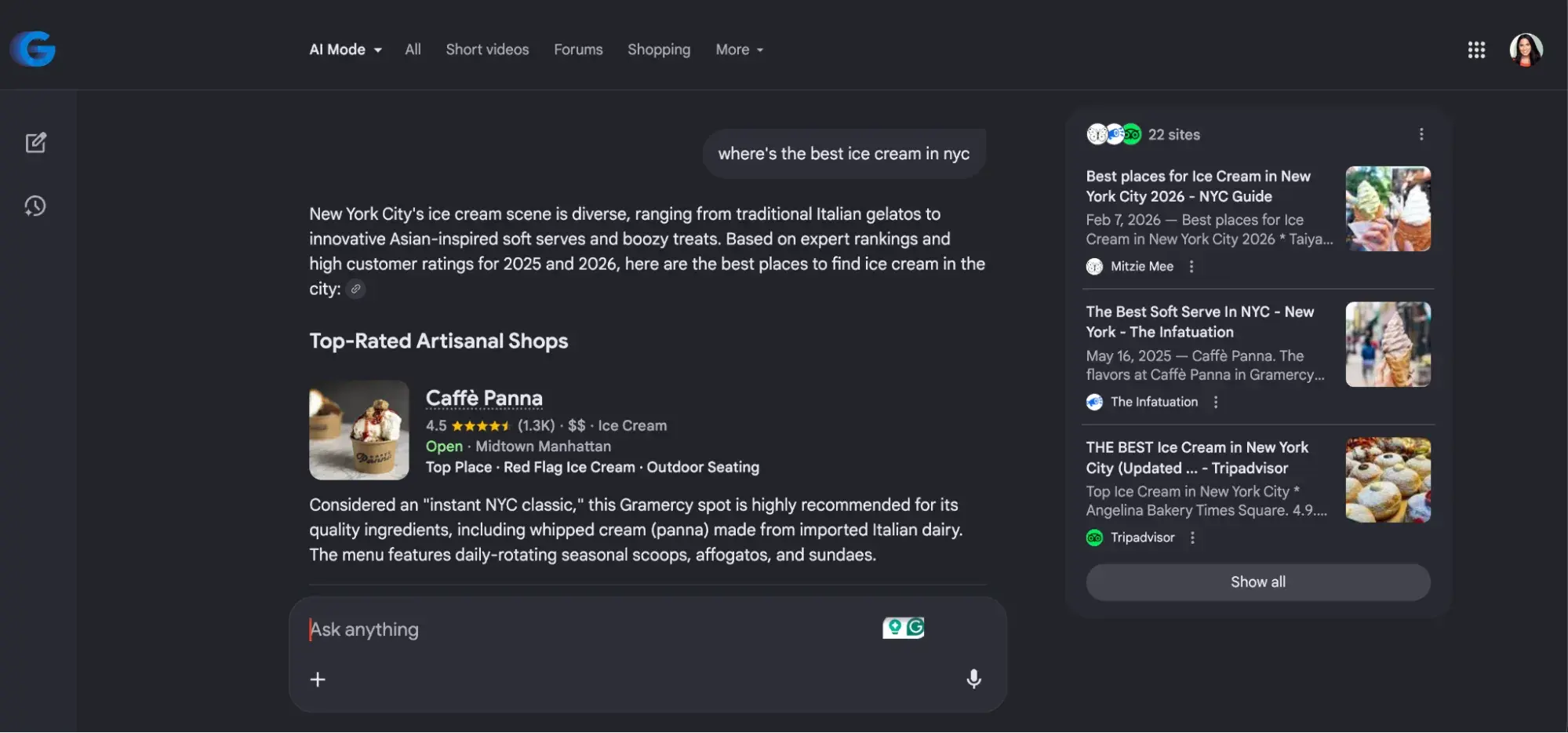
Google reports that over 27% of searches now end without a click as users get what they need directly from these features. And the traffic implications are significant.
Zero-click searches have climbed from 56% to nearly 69% of queries from May 2024 to May 2025, while search referral traffic to 1,000 …read more
Source:: HubSpot Blog