
‘Culture change takes years’: Facing ongoing calls for DE&I gains, publishers set new standards for hiring practices


When Yashica Olden was interviewed to be Condé Nast’s new chief diversity and inclusion officer last fall, HR connected her with several staffers from various racial and ethnic backgrounds to learn about their experiences at the company.
It’s an opportunity Olden, who joined the international media company in October, wants to provide all future candidates interviewing for jobs — giving them a chance to speak about Condé’s workplace culture before they join.
It’s one example of the policies and operational changes media organizations are testing in the face of new pressures to make their businesses less overwhelmingly white and male.
Last summer, sparked by the Black Lives Matter protests following the murder of George Floyd, Breonna Taylor, Ahmaud Arbery, and others, the media industry was one of many to vocalize commitments to improving the representation of Black, Indigenous, and people of color (BIPOC) within their staffs and in their coverage. In practice, those promises were delayed.
Now, media organizations are turning to new HR programs and practices to meet these goals. Still yet, many publishers have not established hard figures of what percentage of new hires should represent people from marginalized communities.
Of the four media companies Digiday spoke to for this story representing a range of sizes and coverage areas, half could not say how many non-white and non-male employees they had hired so far this year, after pledging to diversify their organizations. And while many companies have DE&I goals for its applicant pool — those guidelines don’t often apply to its actual hires.
Editor’s Note: If you are a media employee and are frustrated with the pace of change related to DE&I initiatives, please reach out to our team.
New goals for recruitment and hiring
The pathway for media companies to do a better job of making their newsrooms less white hasn’t always been smooth. And, in some cases, not even after a spotlight was shown on these practices. Take Condé Nast, for example.
In June last year, Condé Nast faced internal criticism after its primarily white executive team signed a letter supporting the Black Lives Matter movement. Staffers found it hypocritical.
Days later, Condé’s food publication Bon Appétit came under fire for the culture of racism, microaggressions and exclusion that took place during former editor-in-chief Adam Rapoport’s reign. Rapoport resigned but the anger remained and many on-camera personalities from the popular BA Test Kitchen YouTube channel left as a result.
Controversies like these had financial implications as well and it led advertisers and media buyers at the time to evaluate whether those companies were brand safe environments under the confines of these DE&I lenses.
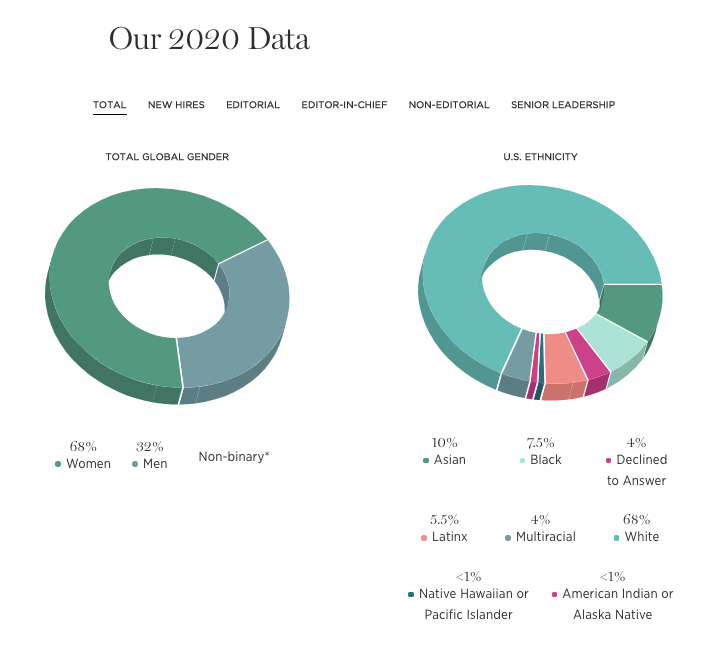
In turn, Condé made new efforts to change the makeup of its organization — including creating Olden’s role — and conducted an internal survey asking employees for their race, gender and sexual orientation. Of the 96% of 6,000 global employees who responded, 30% said they were part of the LGBTQ+ community, 30% as non-white, and 68% as women, according …read more
Source:: Digiday


Related Articles
Black Rings: The Ultimate Guide
By Full Editorial The appeal of black rings extends beyond mere aesthetics. These pieces challenge conventional jewelry norms while maintaining versatility that allows them to…
Media businesses are slowly getting less white, male-dominated, stats from Condé, WSJ, NYT, others show
By Sara Guaglione This article is part of a limited editorial series, called The 2023 Notebook, and is designed to be a guide to marketing…

Dr. Douglas S. Steinbrech, an expert in Male Plastic Surgery, releases the 10 Most Requested Male Faces Going into 2024
By Sitetrail Research Team Dr. Douglas S. Steinbrech, an expert in Male Plastic Surgery, releases the 10 Most Requested Male Faces Going into 2024 Dr.…
‘No one fix’: Giant Spoon’s new diverse audience marketing vp Kenny Mac on working with brands to improve diversity and inclusion
By Kristina Monllos This past summer, Black employees in advertising called on agencies and brands to release employee diversity numbers as well as commit to…
Future of Work DE&I Forum Recap: Companies work to make tangible changes to keep DE&I commitments
By Sara Jerde Almost a year after the murder of George Floyd sparked one of the biggest waves of protest and social activism in American…