
How to Go Viral & the Science of Virality – Marketing Lessons from Internet Cats & Memes

By Neil Patel

We marketers would like to believe we dominate the web, but we secretly admit to ourselves that cats and memes are the true rulers. It can be frustrating to pour hours of work and money into content, only to watch the next Evil Kermit or Sponge Bob meme pull more traffic. Is there a way to learn from the memes without pandering?
As it happens, a cottage industry is popping up. Specialists like Matthew Inman and Jack O’Brien are approaching viral content and how to go viral as a product in and of itself. Meanwhile, researchers like Jonah Berger are studying the science of virality and uncovering what makes memes tick. Leveraged properly, this knowledge can propel you to “the front page” of the web.
But beware. Make a wrong move and you could become the web’s next sacrificial lamb.
Meet Jonah Berger, Viral Scientist
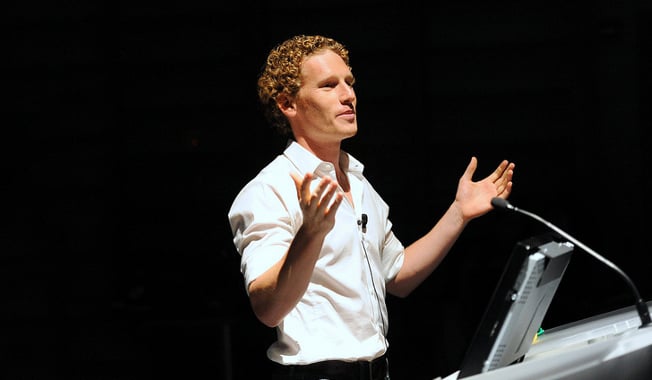
Image by The Wharton School University of Pennsylvania
Professor Jonah Berger researches marketing at the University of Pennsylvania. But he’s not studying the science of advertising or market research. He’s asking a more modern question: “What makes ideas viral and products spread contagiously?”
Even New York Times writers assumed that, of course, the answer would be “to write anything about sex,” or “to title articles ‘How Your Pet’s Diet Threatens Your Marriage,’ and ‘Why It’s Bush’s Fault.’”
But when Jonah Berger and his colleagues analyzed New York Times articles sent via email for three months, they uncovered some unexpected results. While these three traits of viral content shouldn’t be all that shocking:
- surprising
- interesting
- intense
The next two discoveries might be a bit more eye-catching:
- positive
- actionable (practically useful)
Remember, this was an analysis of a news website, where the headlines are all doom and gloom and the stories are about other people, not us. While the intensity of emotions had a lot to do with whether the content was going to get shared, the most shareable content elicited strong positive emotions, like awe, and offered practical advice.
In fact, the power of awe was so overwhelming that one type of article outperformed all the others, to everybody’s amazement: science articles.
As Berger told the New York Times:
We anticipated that people would share articles with practical information about health or gadgets, and they did, but they also sent articles about paleontology and cosmology. You’d see articles shooting up the list that were about the optics of deer vision.
While stories that evoked intense feelings of anger or anxiety were more likely to be shared, stories that evoked feelings of sadness were not.
But the power of awe was one of the most measurable differences between viral content and non-viral content. Awe was distinct from surprise in the sense that “it involves the opening and broadening of the mind.” And it beat equivalent levels of anger and anxiety every time.
Jonah Berger isn’t the only one to suggest this. Will Natha is …read more
Source:: Kiss Metrics Blog


