
How to NOT Break the Law in Marketing: Copyrights, CAN-SPAM, Fair Use

By Neil Patel

Creating a marketing campaign? Besides performing research and finding the right keywords, you’ll need to ensure your campaign follows marketing laws.
Do you know which laws apply to you and which don’t? That can vary based on industry and location. However, here’s a quick rundown of the most common marketing laws in the U.S. and abroad.
Marketing Laws to Be Aware of and Follow
All this talk about laws can be a bit overwhelming. I get that. First, consider asking a legal expert (not me!) if you have specific questions. Keep in mind that if you don’t steal content and don’t try to mislead your customers, you’ll likely stay on the right side of the law.
However, some rules can be a little tricky. This is why I’ve created this list of laws and regulations all business owners and marketers need to know about.
1. Copyright Laws and Rules in Marketing and Advertising
Most marketers know how effective compelling images can be when it comes to engaging readers. However, you can’t just grab any photo off the internet and use it in your ads or marketing.
The moment an artist creates an image, a writer pens a post, or a guy cuts some slits in a canvas and calls it art, they’ve got copyright. While registration is required to enforce that copyright, there’s nothing they have to do to hold that right in the first place. This is different from trademarks and patents, which do require both registration and a fee.
What does this mean for you? Here’s what you need to know:
- Don’t use images without permission unless they are open source or royalty-free.
- Provide attribution (link) to images when required.
- Don’t copy images, content, or phrases from other brands.
- Ensure you can alter images before doing so.
Resources on Copyright Laws in Marketing and Advertising
- Copyright Law of the U.S. | Copyright.gov
- Can I Use that Picture? Infographic Revised and Simplified! | The VCG
- 10 Tools to Find High-Quality Images for Your Blog and Social Media | Neil Patel [PDF]
2. Terms of Use in Marketing and Advertising
Terms of Use is not a law, per se, but rather distinct regulations, including copyright laws and the regulations, on how media can be used on different platforms.
For example, you can’t just take images off Twitter and use them on your website (at least not unless you want to pay $1.2 million.) Not all photos can be used in every situation. For example, a photo from iStock with a “standard license” can be used in advertising, apps, websites, etc.
However, if some situations exceed their terms of service, this requires buying an extended license:
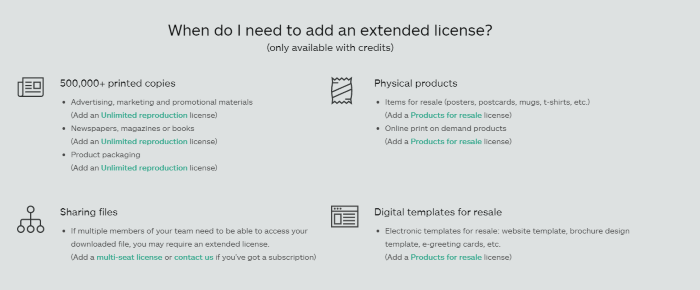
Some photography sites are free for personal or non-commercial usage. …read more
Source:: Kiss Metrics Blog




