How to Write About Your Professional Background

A great way to share more about your background is to have a prepared document, like a professional bio.
A professional bio can be shared with prospective employers, your colleagues, included in your social media profiles, used for speaking engagement announcements, or used as an author bio on a blog.
Writing about your professional background for the first time may feel challenging or awkward, but it doesn’t have to be.
Here, we’ll explore some tips to help you feel more comfortable when writing your own professional bio. Let’s dive in.
What is a professional background?
A professional background is a summary of your professional experiences —coupled with any relevant personal information, including interests or passions — that you’ll use throughout your career as you network with industry peers, apply for new roles, or seek out thought leadership opportunities.
This includes previous jobs you’ve had, successful projects you’ve worked on, significant accomplishments like promotions or awards, professional networking organizations you belong to, and anything else you’d share with someone who wants to know more about you professionally.
Not only is sharing more about your background a great way to tell more about yourself to others, it’s also an opportunity to wholly reflect on your professional journey and the goals you’ve achieved — plus, what you hope to achieve in the future.
Next, let’s dive into how you can get started.
How to Write About Yourself
1. Don’t start from scratch.
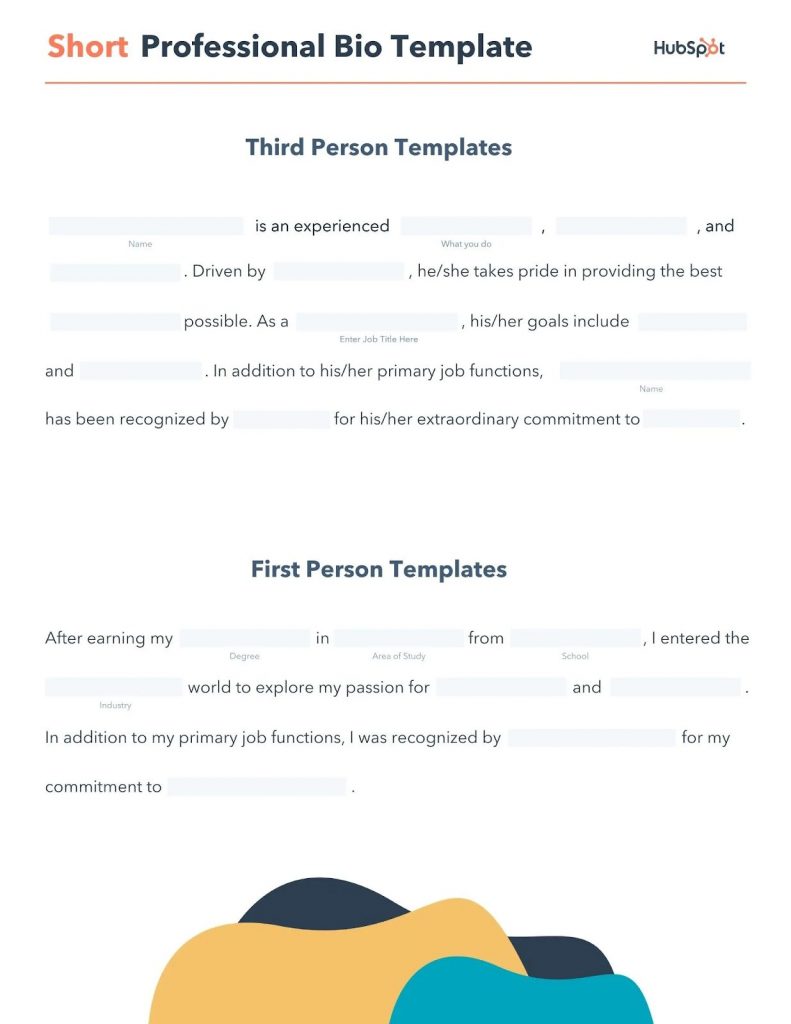
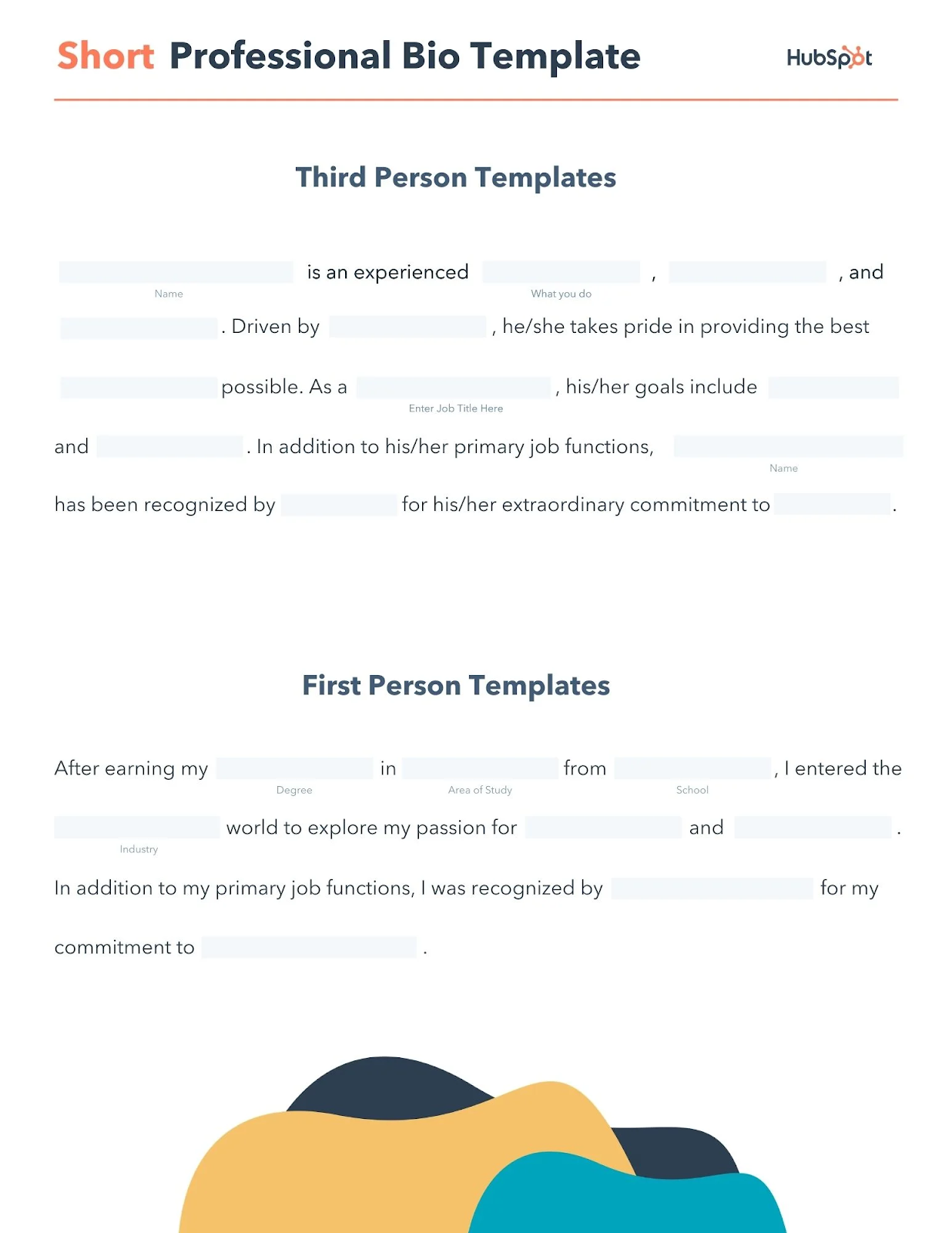
If you’re having trouble figuring out where to start, try using a professional bio template to guide you. Templates, like the ones featured below, make it easier for you to focus on your personal information and accomplishments, without having to worry as much about the structure.
Featured Resource: Professional Bio Templates and Examples
2. Know your audience.
Take into consideration who will be reading your professional bio and cater to your reader.
You may also want to draft different versions of your document to best fit specific audiences. For example, the version you post on your LinkedIn may not be as detailed as the version you post on your personal website, and if your reader is a potential employer, it would help to include details that specifically highlight why you’re the best candidate for the role for which you’re applying.
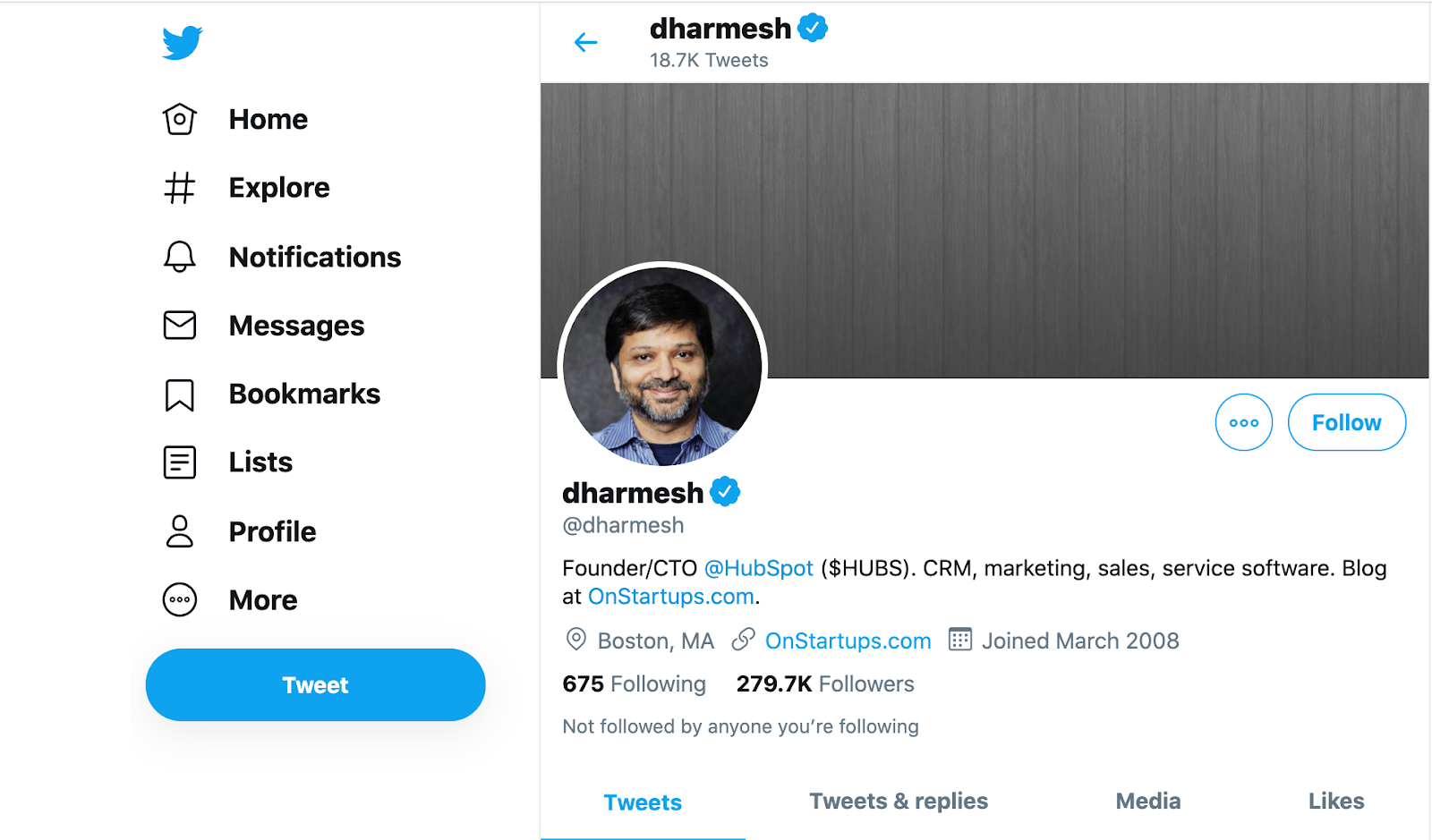
HubSpot Founder Dharmesh Shah uses different bios for different platforms. On Twitter, for instance, Dharmesh’s bio is short and sweet, which is perfect for Twitter’s character limit.
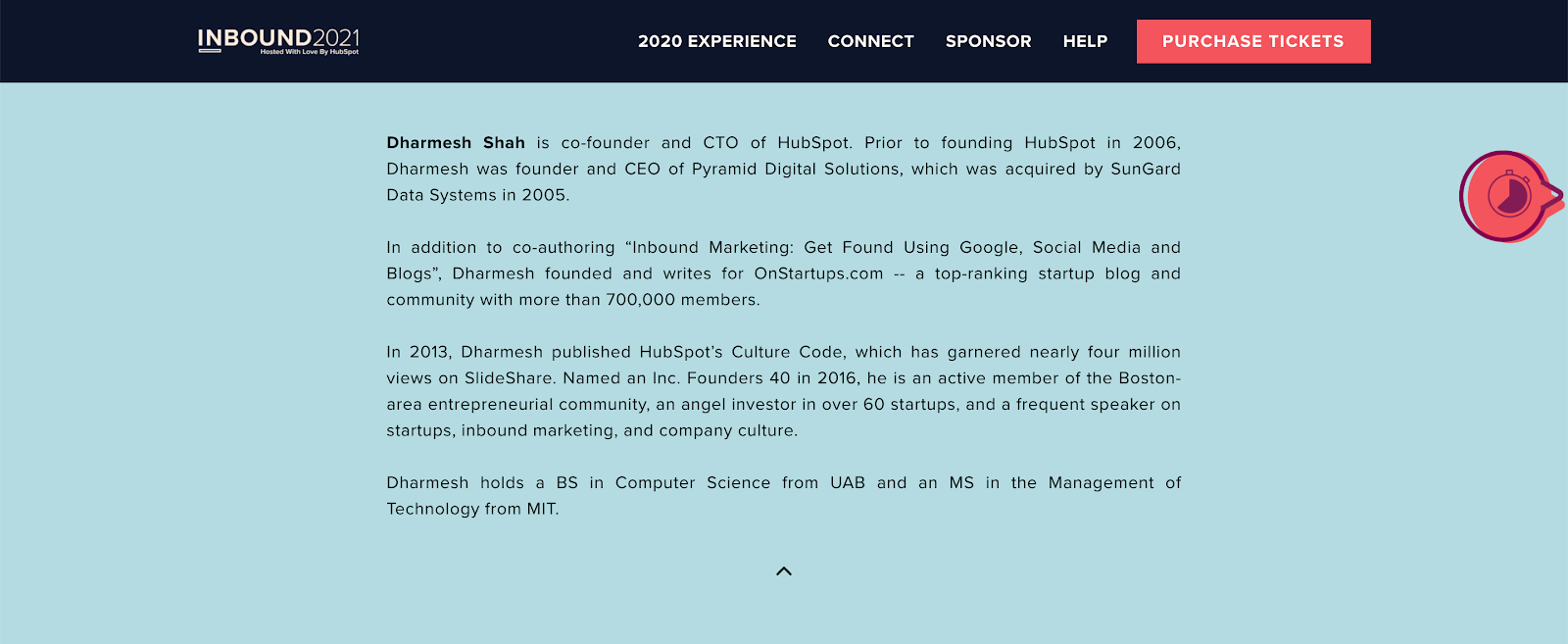
Alternatively, on INBOUND’s website, Dharmesh’s bio is written in third-person for attendees. This bio makes Dharmesh’s current role clear while providing some key background information.
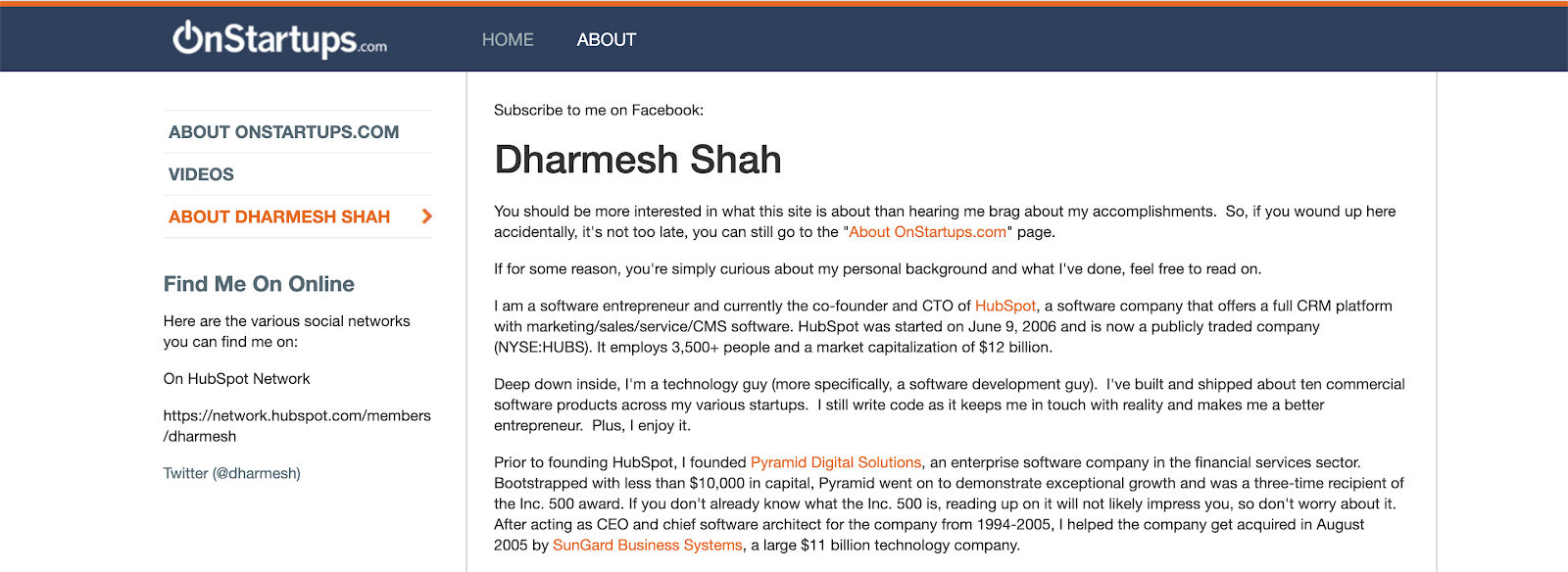
Finally, in his OnStartups bio, Dharmesh’s voice is personable since he’s speaking directly to the reader. This gives readers more insight into Dharmesh’s background directly from his perspective.
Source:: HubSpot Blog