
Traditional Marketing vs. Digital Marketing: Why Not Both?


By Lauren Dean

Traditional marketing versus digital marketing has become a hot topic among marketing professionals.
I set out to learn the pros and cons of each and return with my findings so that you can make an informed decision about marketing your brand.
I’ll go over what the two terms mean, and how they work together. Then, I’ll dive deeper into traditional marketing, which sometimes feels like it doesn’t get a fair shake in the current digital-dominated landscape.
But if you’re trying to choose between the two, I’ll give away the ending before we begin: the answer is both.
Table of Contents
What is traditional marketing?
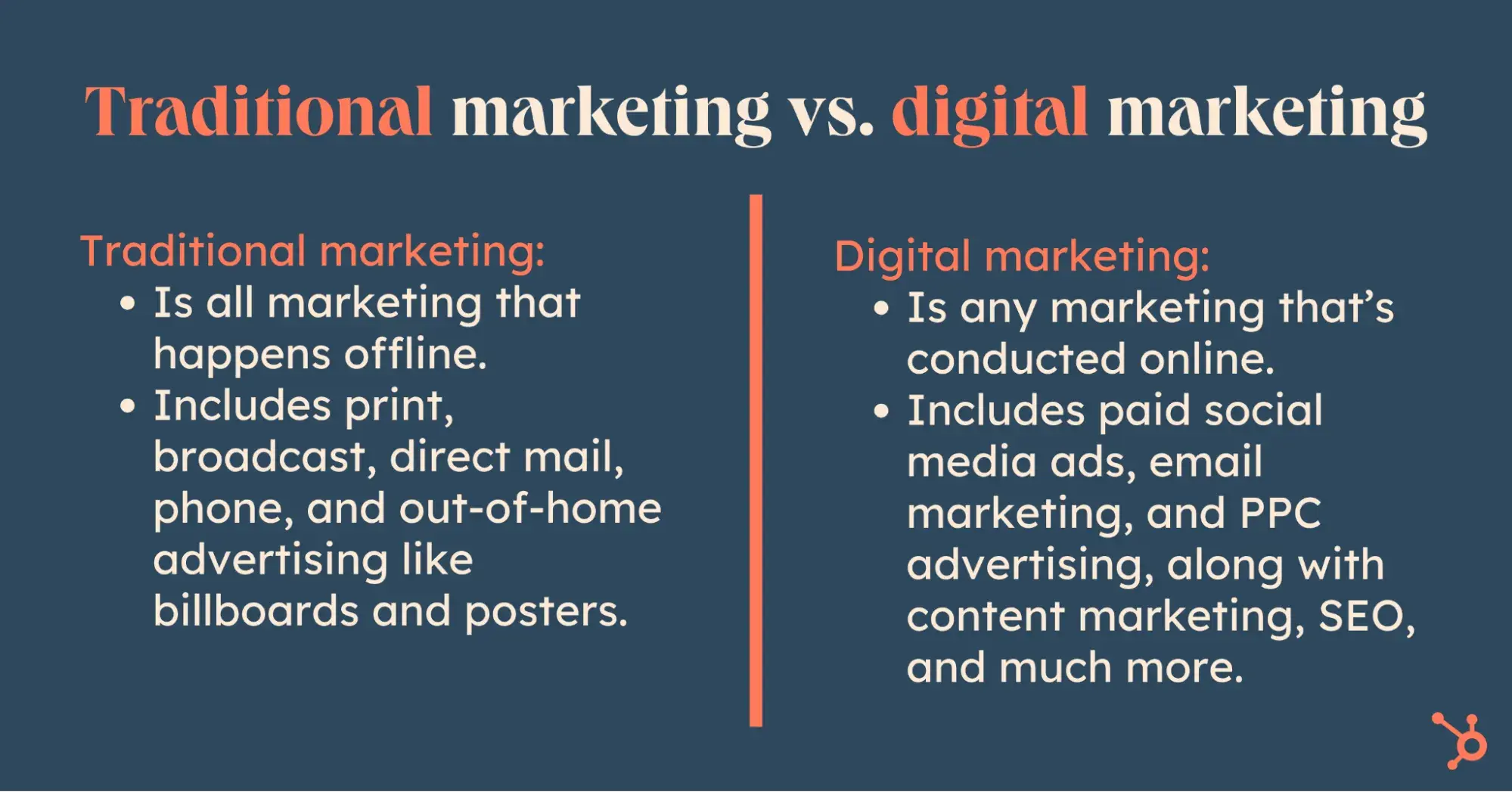
Traditional marketing is all marketing that happens offline. This includes print, broadcast, direct mail, phone, and out-of-home advertising like billboards and posters.
It’s called the traditional method because it’s the way marketing was done pre-internet. But even though the contemporary market has incorporated newer methods, traditional marketing isn’t going away.
What is digital marketing?
Digital marketing, on the other hand, is any marketing that’s conducted online. Examples here include paid social media ads, email marketing, and PPC advertising, along with content marketing, SEO, and much more.
This post won’t go into all the details, but for a deep dive into digital marketing, check out What is Digital Marketing: Everything You Need to Know.
As the world becomes more digital, the way we market has evolved. Not only is digital marketing sometimes more cost-effective than traditional, but it’s also a more direct way to connect with target audiences globally.
Digital marketing has now overtaken traditional marketing as the primary way to reach consumers. But really, these two strategies coexist, and mixing methods is becoming the norm.
In today’s landscape, it’s no surprise that digital marketing is an increasingly important revenue driver. In fact, 78% of businesses that use social selling outperform those that don’t.
Disadvantages to digital marketing do exist, however. Chief among them are privacy and security concerns. According to the same 2024 report, online data privacy is valued as a human right by 74% of survey respondents.
In response, the tide has shifted toward more safeguards, with 84% of marketers saying it’s affected their strategy. Apart from that, digital marketing faces the challenge of people being fed up with disruptive ads, like pop-ups and video, while viewing offline ads favorably.
What about AI?
In 2024, according to our <a target="_blank" rel="nofollow" …read more
Source:: HubSpot Blog


