A Marketer's Quick Guide to Dynamic Ads


By mbretous@hubspot.com (Martina Bretous)

Remember when you’d go to the mall, see something you liked, but then leave without it? Then you’d leave the mall and think about it the whole drive home, wondering if you made the right decision until you forgot about it. That was until you saw someone else with the exact item we wanted. Ah, the good ol’ days.
Today, you can’t leave an item in your cart without it following you everywhere online. Who do we have to thank for that? Technically, a lot of people – marketers, retargeting tools, Al Gore’s internet – but for the purpose of this article, we’ll focus on one: dynamic ads.
Dynamic ads allow brands to change the ads shown to users based on their behavior.
Let’s dive into what exactly dynamic ads are, their benefits, and how to use them on social media platforms like LinkedIn and Facebook.
Dynamic ads are often used in remarketing campaigns to reach users who have already interacted with a brand. More on that here.
Static ads, on the other hand, do not adapt based on external data, so they tend to target broader audience groups for brand awareness or product launches.
A banner ad can look like this:
Or like this:
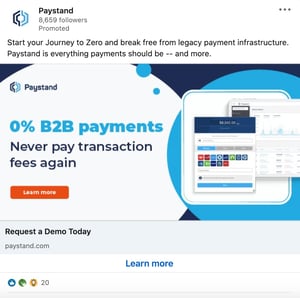
They range in size and placement depending on the platform on which they’re displayed.
The Benefits of Dynamic Ads
Ad personalization is one of the biggest advantages of using dynamic banner ads. In a 2020 study by Innovid, 43% of respondents agreed that ads should be personalized.
What’s more, 30% of respondents said they liked brands more when ads were personalized. It’s easy to understand why – there’s nothing more annoying than getting an irrelevant ad that doesn’t relate to you or your interests. In fact, it’s a major reason why people get adblockers.
In 2020, AudienceProjects surveyed people in the US, UK, Denmark, Sweden, Norway, and Finland and found that avoiding offensive or irrelevant ads was the second most popular reason why they got adblockers.
The more personalized the ad, the better the chances it will resonate with the audience. This brings us to the next benefit of dynamic ads: relevance.
While an ad may be personalized, it may not be relevant to that user’s current stage in the buyer’s journey.
For instance, imagine you’ve heard of a brand but aren’t exactly sure what they do or what they offer. Getting an ad to request a product demo may be too big of a jump. You may need more nurturing before you reach that level of interest in their products.
With this in mind, dynamic ads can help you only present ads that will meet the user where they are. Doing so can move them further down the funnel and help generate more revenue for your brand.
This brings us to return on investment (ROI). Because of the reasons outlined above, your dynamic …read more
Source:: HubSpot Blog